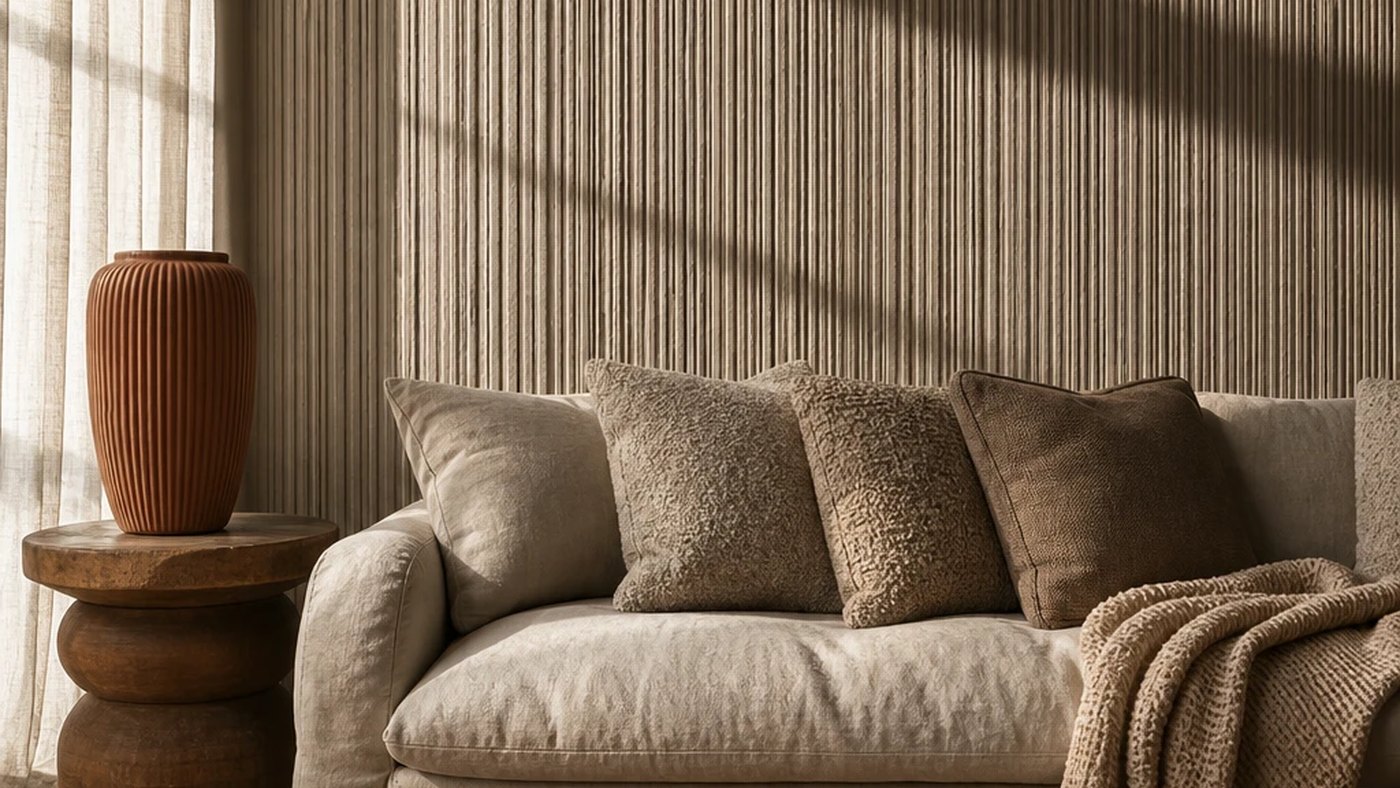
Some rooms look wonderful in photographs and exhausting in real life. Others quietly keep getting better. The difference is rarely the trend someone followed — it is almost always the quality of the foundation underneath it.
Start with the bones, not the colour
Before a single paint chip is chosen, we look at light, circulation and storage. Rooms that age beautifully share familiar traits: a layout that works with how people actually move through the house, generous daylight, and enough tucked-away storage that surfaces can stay calm.
If the bones are right, decorating becomes a pleasure rather than a rescue mission. If they are wrong, no amount of styling will hold the room together for long.
Build a palette you can live with in every season
We base interior schemes on warm neutrals drawn from natural materials — clay, oatmeal, stone, soft green, undyed wood — then introduce interest through texture instead of volume of colour.
- Anchor tones on walls, floors and large upholstery: quiet, warm and easy to live beside.
- Mid tones in joinery, curtains and rugs: they add depth without shouting.
- Accents in cushions, art, ceramics and hardware: the easiest layer to change when your taste moves on.
This layering means a refresh later costs a fraction of a full redecorate, and the room never feels dated in the meantime.
Texture is the real luxury
Boucle against linen, ribbed plaster beside smooth joinery, a handmade bowl on a salvaged timber table. Texture reads as quality long after a decorative motif has fallen out of fashion — and it photographs beautifully in the softer light most homes actually have.
Lighting in layers, warmth in temperature
A single central fitting flattens a room. We plan at least three layers: ambient light for general use, task light where work happens, and warm accent light at eye level for evenings. Dimmers and warm white bulbs transform the same room from bright daylight functionality to a soft, settled evening without changing a thing about the furniture.
Design for the ordinary Tuesday evening, not for the day you move in. That is where lasting comfort lives.
Buy fewer, better, repairable things
Solid timber over veneer where it takes knocks, wool and cotton over synthetics where hands and feet land, unlacquered metals that patina honestly. Choosing pieces that can be repaired by a local tradesperson keeps your interiors out of landfill and keeps them looking cared for.
Where we begin on your project
Our interior work starts with an unhurried walkthrough of how each room is used across a normal week, followed by a scheme with real samples you can hold against your own walls in your own light. From there, flooring, lighting and decoration are staged so the house stays livable while it improves.
If you would like help turning a familiar room into one that feels considered, warm and quietly timeless, our team would be glad to sketch the first ideas with you.